IPPBX: A high-performance, secure, fully open voice core
Miuda IPPBX is a commercial IP PBX solution built on the open-source RustPBX project, designed for modern enterprise voice communications. It is built to support multi-branch enterprises with centralized control, flexible deployment, and consistent voice experience across locations.
Why Miuda IPPBX?
Miuda IPPBX is built on an observable and extensible PBX architecture, with core modules running efficiently on the Rust runtime.
- ✓ Commercially developed on top of the open-source RustPBX project, with enterprise-ready enhancements.
- ✓ Cluster-ready in 0.5: distributed session registry, cross-node call control and user-data replication.
- ✓ Per-call evidence trail: leg timeline, RTCP media quality, and a unified error reference in every CDR.
- ✓ Security-first design that avoids memory risks common in legacy PBX stacks.
- ✓ Cloud-ready deployment model designed for CI/CD and infrastructure-as-code pipelines.
Get started fast
Launch with docker compose or Kubernetes, then connect with the IPPBX SDK to complete your first call flow in minutes.
A voice platform engineered for builders
A scalable foundation that spans media, orchestration, and compliance so teams can trust their voice core.
Rust-grade concurrency
Rust's async ecosystem keeps sub-millisecond scheduling even in high-concurrency media scenarios, ensuring consistent call quality.
Full-stack open ecosystem
Core code, SDKs, and ops tooling are open sourced for community-driven plugins and bespoke voice + AI workflows.
Event-driven AI integration
WebSocket / gRPC event buses stream call state in realtime for seamless AI agent, QA, and knowledge base integrations.
Core calling capabilities
A carrier-grade voice core that covers access, media, and call control with deterministic latency.
- Unlimited extensions with per-device concurrent login policies
- Codec support: G.711 / G.722 / G.729 / Opus
- Built-in WebRTC and SRTP for encrypted, cross-platform sessions
- SIP over WebSocket for seamless browser endpoints
- DTMF passthrough via RFC2833 and SIP INFO
- Native recording, attended and blind transfer, and three-way calling
- Adaptive call queues with hold music, retries, overflow routing, and more
Configurable operations
Visual tooling turns complex routing and billing logic into intuitive workflows.
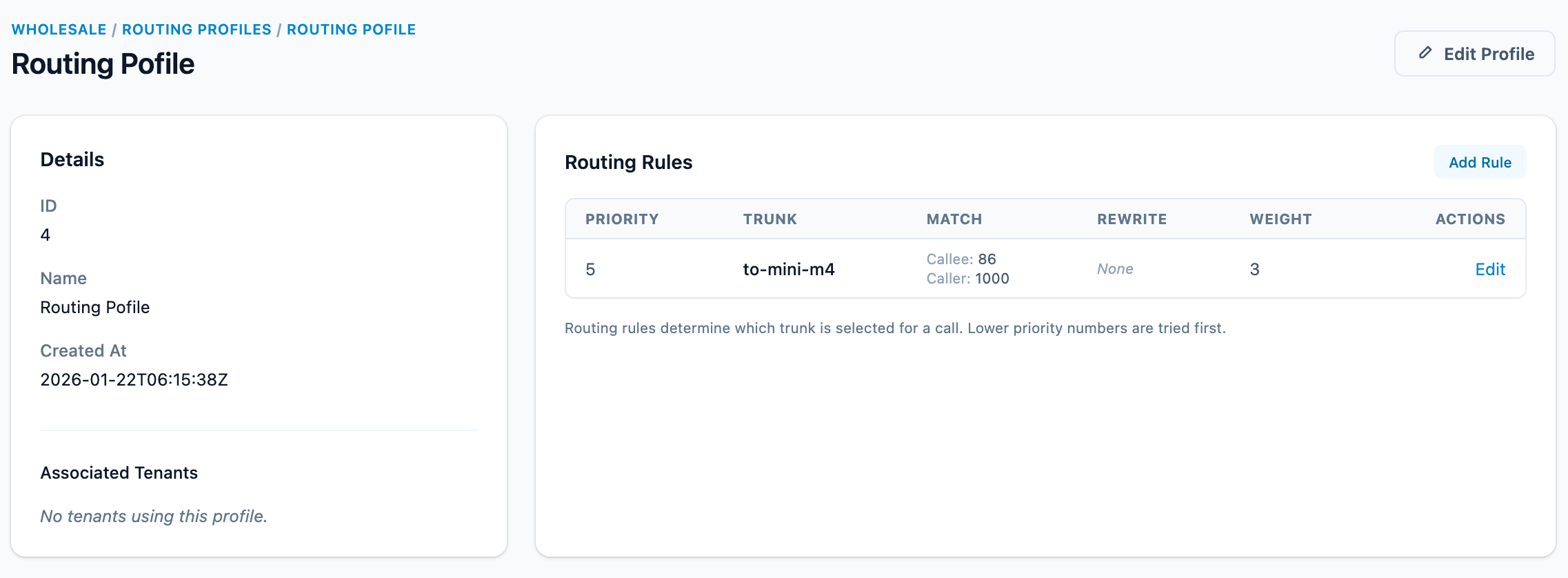
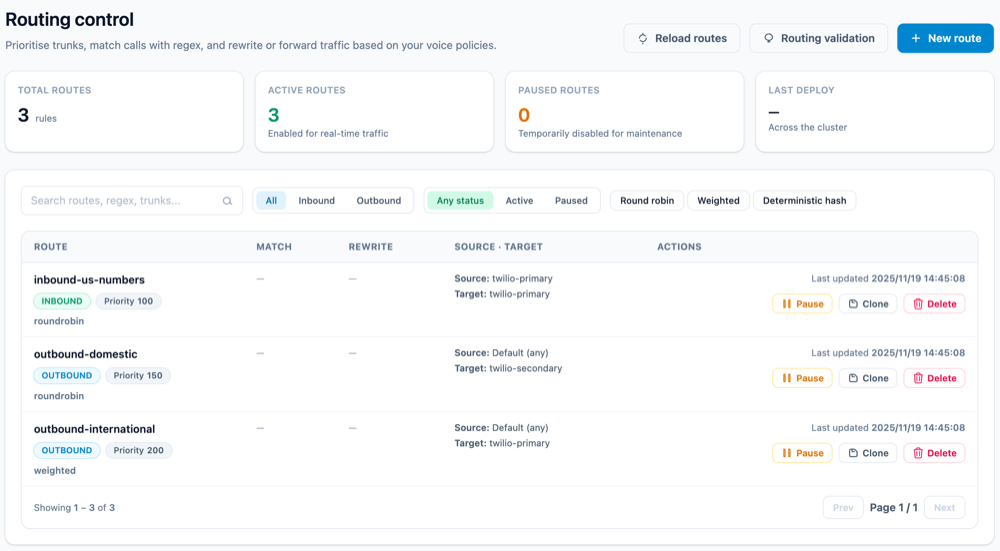
- Visual routing rules with an advanced drag-and-drop editor
- SIP Trunk and DID onboarding with capacity management
- Custom billing templates, including department-level chargeback
- Rich call detail records with transcription and export
Engineered for operations teams
Full-stack tooling for DevOps and voice engineers to deploy, debug, and scale with confidence.
- In-browser routing and SIP trunk tests powered by WebRTC + SIP over WebSocket
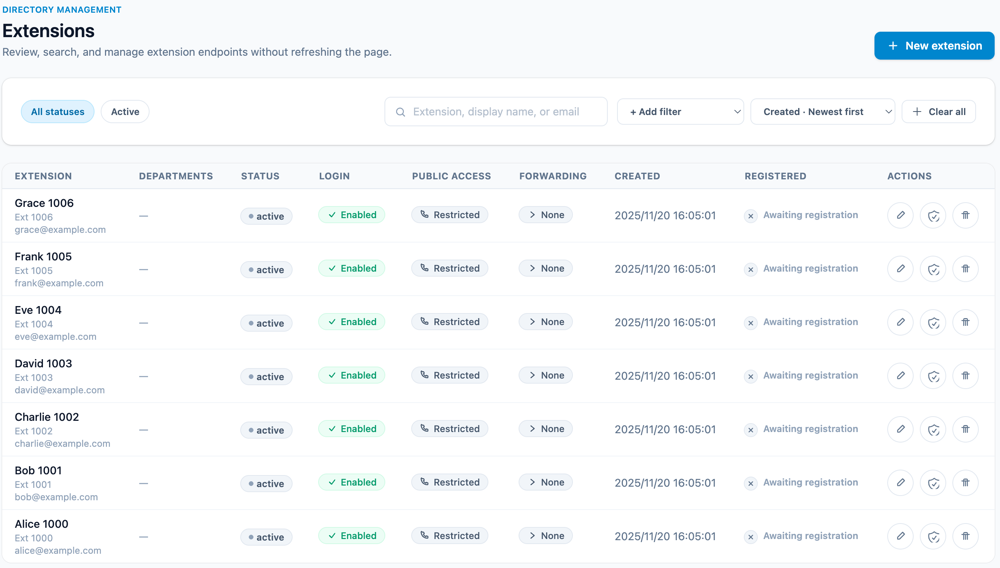
- Live lookup for calls, registered devices, and endpoint status
- Advanced admin console with observability and audit trails
- Multi-account, multi-department, role-based access control
- Support for MySQL, PostgreSQL, and SQLite backends
- Guided IVR design and publishing pipeline
Production-grade security posture
Defend high-concurrency, real-time voice workloads from access to data lifecycle.
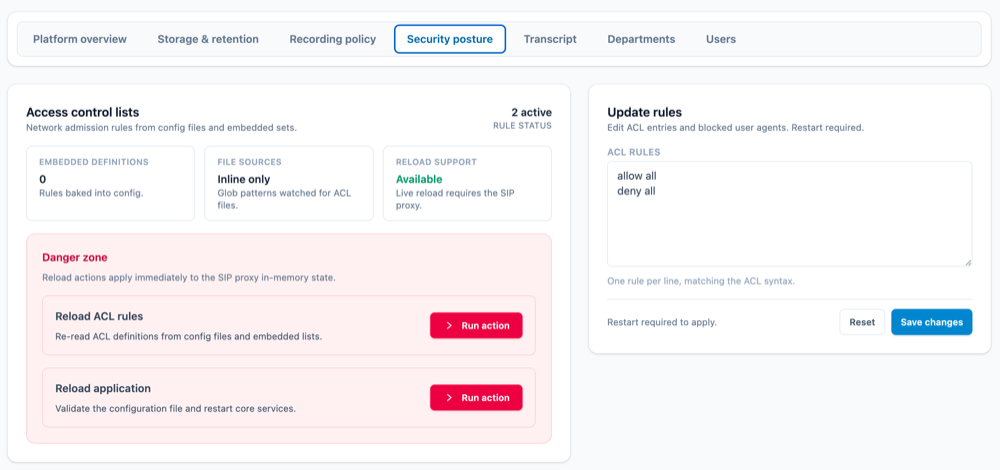
- Embedded firewall with IP and User-Agent allow/deny policies
- Configurable call concurrency caps and rate limits to absorb spikes
- Automated archival with scheduled backups to S3-compatible storage
- Standardized Docker-based deployment for consistent environments